Field Notes
The Trillion-Parameter Barrier Has Fallen, and Silicon Valley is Ignoring the Architect
Cerebras is proving that the future of massive AI doesn't belong to the GPU clusters we’ve been told are inevitable, but to a fundamental redesign of the chip itself.
Numerous Times Field Notes
Dispatches from inside the room
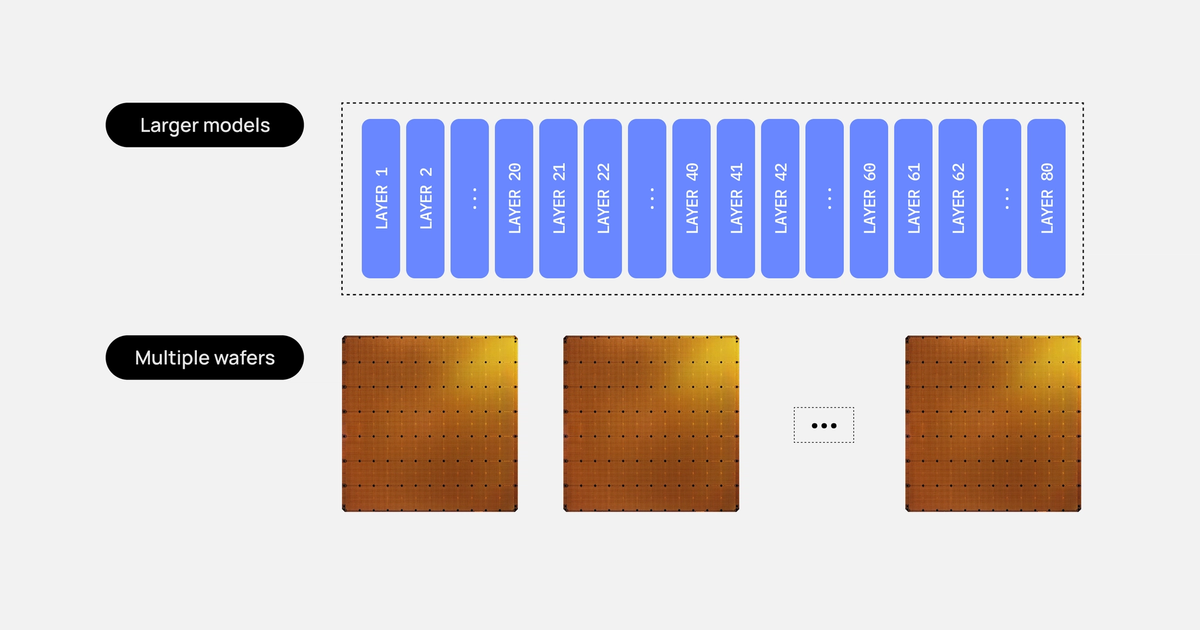
I have spent the last decade walking through data centers where the hum of cooling fans sounds like a choir of compromise. For years, the industry has accepted a messy reality: if you want to run a massive artificial intelligence model, you have to stitch together thousands of small chips, praying the interconnects don't bottleneck the entire operation. This week, that compromise was rendered obsolete. Cerebras Systems announced it is now deploying frontier-scale models—the kind with over a trillion parameters—on its unique wafer-scale hardware.
This isn't just a technical milestone; it is a direct challenge to the GPU hegemony that has gripped the sector. To understand why this matters, you have to understand the inherent inefficiency of the status quo. When we build models on traditional hardware, we are essentially trying to build a cathedral out of Lego bricks. You spend more time worrying about the glue between the bricks than the architecture of the building. The data has to travel across boards, through cables, and between racks, losing speed at every junction.
Cerebras takes a different path by keeping the entire process on a single giant slice of silicon. By eliminating the need to shatter these trillion-parameter models into thousands of tiny pieces, they have removed the primary friction point of modern computing. From the floor of the labs where these machines are built, the shift feels seismic. We are moving away from the era of 'distributed computing' and into an era of 'unified silicon.'
This development matters because it exposes the fragility of the current AI arms race. The market is currently obsessed with who can buy the most Nvidia chips, but that is a scavenger's mentality. Real power lies in efficiency. If you can run a frontier model without the overhead of a massive cluster, you aren't just saving power; you are accelerating the iteration cycle. The companies that win the next five years won't be the ones with the largest capital expenditure budgets, but the ones who stop fighting the laws of physics in their networking closets.
Watch the hyperscalers closely in the coming months. As Cerebras begins to scale these deployments, the narrative that GPUs are the only path to the frontier will start to crumble. Look for a pivot toward specialized hardware as the realization sinks in: the cluster is a crutch, and the wafer is the future. The era of the fragmented brain is over, and the era of the monolithic processor has begun.
One essay. Every Friday. From operators who actually run things.
Join thousands of founders, partners, and operating leaders. No filler. Unsubscribe anytime.
Reader notes
0 NotesSign in to comment. Comments are signed and public.
Sign in →