Founders
The Silent Vigil at the Perimeter of Yersinia Pestis
In the wake of a researcher’s death in Irkutsk, the cold reality of biological containment shifts from theoretical protocol to a deeply human trial of endurance.
Numerous Times Founders Desk
The first ten years, in the founder's voice
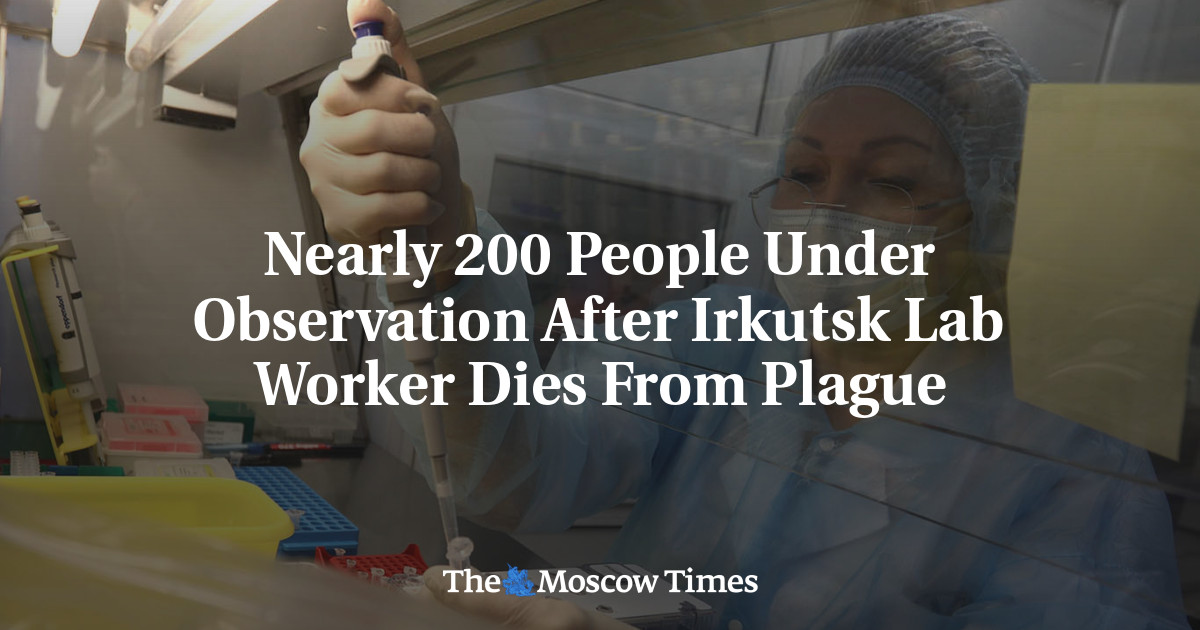
We often speak of infrastructure in terms of steel and fiber, but the most critical systems are composed of human routines and the bodies that uphold them. In Irkutsk, a city defined by its proximity to the oldest lake on Earth and its history of scientific isolation, that human infrastructure is currently being tested by a ghost. A laboratory worker has died from the plague, and in the aftermath, nearly two hundred individuals have moved into a state of suspended animation—a collective observation meant to ensure a singular tragedy does not become a municipal one.
Inside the facility, the culture of the operator is usually one of invisibility. To do the job well is to ensure that the public never has to think about the pathogens being sequenced, studied, or neutralized. But when the containment fails at the individual level, the operator becomes the focal point. This isn't about the sensationalism of a medieval disease returning to the modern world; the plague never truly left the soil or the rodents of the steppe. Rather, this is about the builders of safety protocols and the terrifying moment when those protocols demand the ultimate isolation of their own colleagues.
There is a specific, quiet discipline required to be one of the two hundred now under observation. These are not just statistics; they are technicians, janitors, and researchers who understand better than anyone the mechanism of their own risk. They are living through the incubation period, a stretch of time where every slight fever or cough is interrogated with existential weight. The Founders desk at Numerous Times looks at these moments not as news items, but as studies in institutional resilience. The people who built these labs designed them with the understanding that the most dangerous element is always the human one—the potential for a slipped glove, a weary eye, or an unforeseen breach.
Yet, there is a dignity in the response. To see two hundred people step into the shadows of observation is to witness a profound act of civic maintenance. It is an acknowledgment that the collective safety outweighs the individual’s desire for normalcy. The scientific community in Siberia has long operated under the weight of harsh geography and high stakes, but this specific vigil reminds us that the front lines of global health are often manned by those whose names we only learn when the worst occurs. We are watching a community of specialists hold the line, waiting out the clock in a silent, sterilized room, ensuring the rest of the world can remain oblivious to the microscopic threats they navigate every day.
One essay. Every Friday. From operators who actually run things.
Join thousands of founders, partners, and operating leaders. No filler. Unsubscribe anytime.
Reader notes
0 NotesSign in to comment. Comments are signed and public.
Sign in →