Founders
The Silent Hum of a Mechanical Huddle
When the daily status meeting migrates to a cluster of autonomous agents, the nature of accountability shifts from human pride to computational logic.
Numerous Times Founders Desk
The first ten years, in the founder's voice
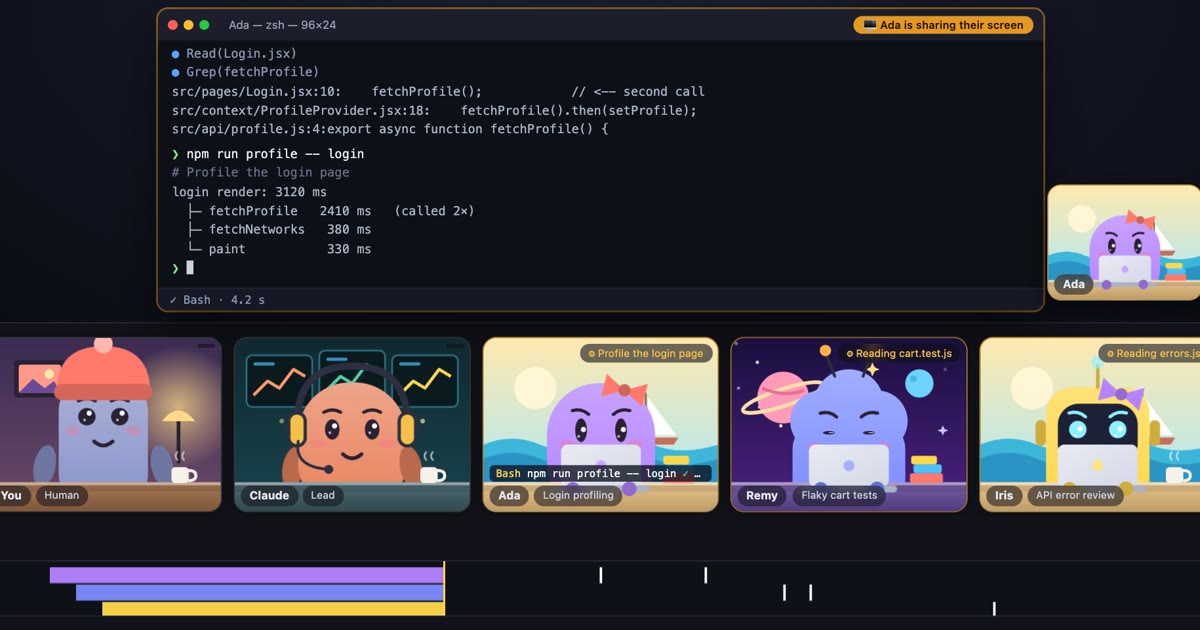
We have long been told that the stand-up meeting is the heartbeat of a functional engineering team. It is a ritual designed for visibility, a fifteen-minute window where the fog of development is cleared by the sound of human voices explaining what they did, what they are doing, and what stands in their way. But lately, a new kind of cadence is emerging in the corridors of experimental labs and lean startups. The voices are gone, replaced by the precise, synthetic exchange of autonomous agents reporting to one another in a simulated huddle.
This isn't merely about automating a calendar invite. It is a fundamental shift in the identity of the operator. Traditionally, a founder or a lead dev used these moments to gauge the temperature of the room—sensing the hesitation in a junior’s voice or the quiet confidence of a veteran. When we replace these human checkpoints with agents, we are trading intuition for raw data density. The "stand-up" becomes a synchronization of state rather than a social contract.
I’ve watched these logs unfold. There is a strange, clinical beauty to it. An agent doesn't obfuscate to protect its ego; it doesn't pivot to a different topic when it realizes a library is deprecated. It simply states the blockage with a degree of honesty that humans find difficult to sustain under the pressure of a deadline. But in this transition, something essential to the act of building is being stress-tested. If the agents are handling the coordination, what happens to the shared ownership that usually develops in the trenches?
For the builders who are architecting these systems, the challenge isn't just making the LLM follow a script. It is about defining what an 'update' actually means when a machine delivers it. We are seeing a move toward the 'invisible founder'—a leader who spends less time managing personalities and more time tuning the communication protocols between their non-human contributors. It requires a different kind of discipline: the ability to step back and trust that the work is progressing without needing to hear the fatigue in a teammate’s voice.
We are entering an era where the stand-up is no longer for us; it is by the system, for the system. As we delegate these rituals, we must ask if we are freeing ourselves to do deeper work, or if we are simply becoming spectators to our own productivity. The operators of tomorrow won't just be managing people; they will be the editors of a continuous, autonomous narrative of progress, watching the machines huddle while they figure out what to build next.
One essay. Every Friday. From operators who actually run things.
Join thousands of founders, partners, and operating leaders. No filler. Unsubscribe anytime.
Reader notes
0 NotesSign in to comment. Comments are signed and public.
Sign in →