Founders
The Rustable Reckoning: How Three Engineers Are Recalibrating the Database Interface
A new open-source client built entirely in Rust is challenging the industry’s reliance on bloated, memory-heavy tools for data management.
Numerous Times Founders Desk
The first ten years, in the founder's voice
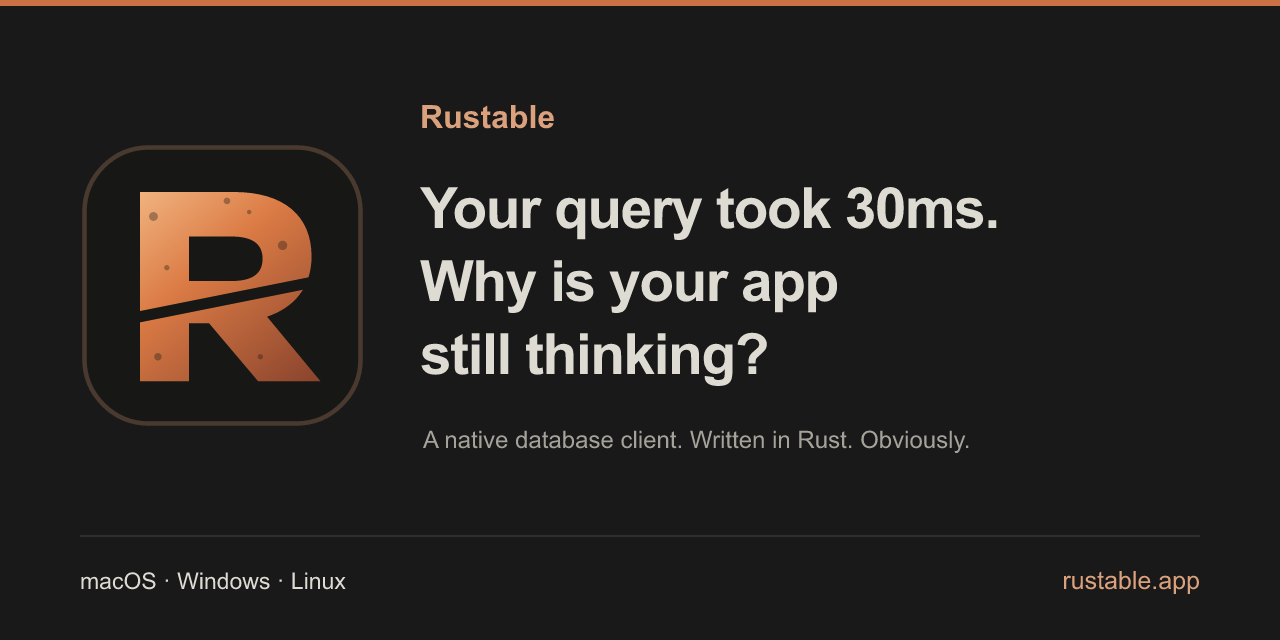
Earlier this week, a small collective of independent developers quietly released Rustable, an open-source database client that aims to strip away the performance overhead long associated with modern development tools. The project, which surfaced on developer hubs like Hacker News, represents a significant pivot from the current trend of building desktop software on top of web-based engines. By utilizing the Rust programming language, the team behind the tool is attempting to provide a leaner, safer alternative for engineers who spend their days navigating complex data structures. This release marks a return to native-feeling applications that prioritize speed and efficiency over the convenience of cross-platform web wrappers.
To understand why a new database client matters, one must look at the prevailing landscape of software development over the last decade. For years, the industry has gravitated toward frameworks like Electron, which allow developers to build desktop apps using JavaScript and HTML. While this accelerated the pace of feature delivery, it created a generation of tools that consume massive amounts of memory and often feel sluggish on even high-end hardware. The builders of Rustable recognized this fatigue among their peers, identifying a growing demand for tools that respect the underlying machine's resources while maintaining a modern, intuitive user interface.
At the center of this movement are the builders themselves, a group of systems-level enthusiasts who saw the database client not just as a utility, but as a bottleneck in the daily workflow. They chose Rust because it offers memory safety without the need for a garbage collector, ensuring that the application remains responsive even when handling massive result sets. This wasn't merely a technical preference; it was a philosophical stand against the bloat that has come to define the modern desktop experience. They are betting that developers are tired of their tools fighting for CPU cycles and are ready for a return to purposeful, high-performance engineering.
The initial reception of the tool highlights a specific tension within the engineering community regarding the trade-offs of open-source development. While the project is in its early stages, the decision to keep the codebase open invites a level of scrutiny that many commercial products avoid. This transparency is intentional, as the founders believe that the people who use the tools should also be the ones who can audit, extend, and improve them. It is a shout-out to the era of software where utility was measured by stability and openness rather than by how many venture-backed features could be crammed into a single release cycle.
What sets this specific endeavor apart is the focus on the "middle layer" of the developer’s stack. Most innovations in the database world happen at the storage layer or the query optimization layer, but the interface through which an engineer actually sees the data is often an afterthought. By focusing on the ergonomics of the client, the Rustable team is arguing that the human-to-machine interface is just as critical as the speed of the database itself. They have spent months refining how tables are rendered and how connections are managed, ensuring that the software stays out of the way of the task at hand.
This matters because the tools we use define the limits of our productivity and the quality of our output. When a database client lags during a critical production investigation, it adds unnecessary cognitive load to an already stressful situation. The builders of this new client are essentially trying to lower the barrier between an engineer’s intent and the data’s response. By removing the abstractions that slow down standard tools, they are creating a more direct line of sight into the systems that power modern digital life, from e-commerce platforms to financial ledgers.
Furthermore, the project serves as a practical demonstration of how far the Rust ecosystem has matured in recent years. Building a complex graphical user interface in a language known for its strict compiler was once considered a monumental task reserved for those with infinite time. Now, the Rustable team is proving that the libraries and community support have reached a tipping point where sophisticated, consumer-ready tools can be built efficiently. This shift could signal a broader movement away from interpreted languages for system-critical utilities, encouraging other founders to reconsider their own tech stacks.
We are currently witnessing a quiet revolution in the way software is crafted by small, disciplined teams. Rather than chasing the widest possible market with a generic product, these builders are focusing on a niche that values technical excellence and durability. They are writing code for people who care about how their computers actually work, creating a sense of kinship between the creator and the operator. It is a reminder that the best tools are often born from a developer's own frustration with the status quo, rather than a corporate roadmap or a marketing directive.
Looking ahead, the success of the project will likely depend on how well it can bridge the gap between its high-performance core and the diverse needs of a global user base. The developers face the challenge of supporting a wide array of database engines and operating systems without compromising the speed that defines their brand. They will need to cultivate a community that contributes as much as it consumes, turning a solo project into a sustainable ecosystem. If they succeed, they could very well redefine what we expect from the software that sits at the heart of our technical infrastructure.
As the first wave of users begins to integrate the tool into their workflows, the focus will shift from the novelty of the implementation to the reliability of the execution. The tech world will be watching to see if a small, open-source team can truly compete with the established giants of the industry through sheer technical merit. It is an ambitious bet on the future of native software, and one that reflects a deep respect for the craft of engineering. For now, the builders remain focused on the code, proving that sometimes the best way to move forward is to get back to the basics of performance and safety.
In the coming months, keep an eye on how the project handles the inevitable influx of feature requests and bug reports that follow a high-profile launch. The transition from a quiet development phase to a community-driven project is often where the most important lessons are learned. Whether or not this specific tool becomes the new industry standard, the conversation it has started about software efficiency is here to stay. The founders have laid down a marker, reminding us all that the tools we use should be as well-built as the systems we use them to create.
One essay. Every Friday. From operators who actually run things.
Join thousands of founders, partners, and operating leaders. No filler. Unsubscribe anytime.
Reader notes
0 NotesSign in to comment. Comments are signed and public.
Sign in →