Field Notes
The Death of the Proprietary Agent: Why OTel-Native is the New Startup Baseline
A shift toward vendor-neutral telemetry standards is forcing infrastructure founders to choose between building walled gardens or providing total portability.
Numerous Times Startups Desk
Founders, funding rounds, and the zero-to-one slog
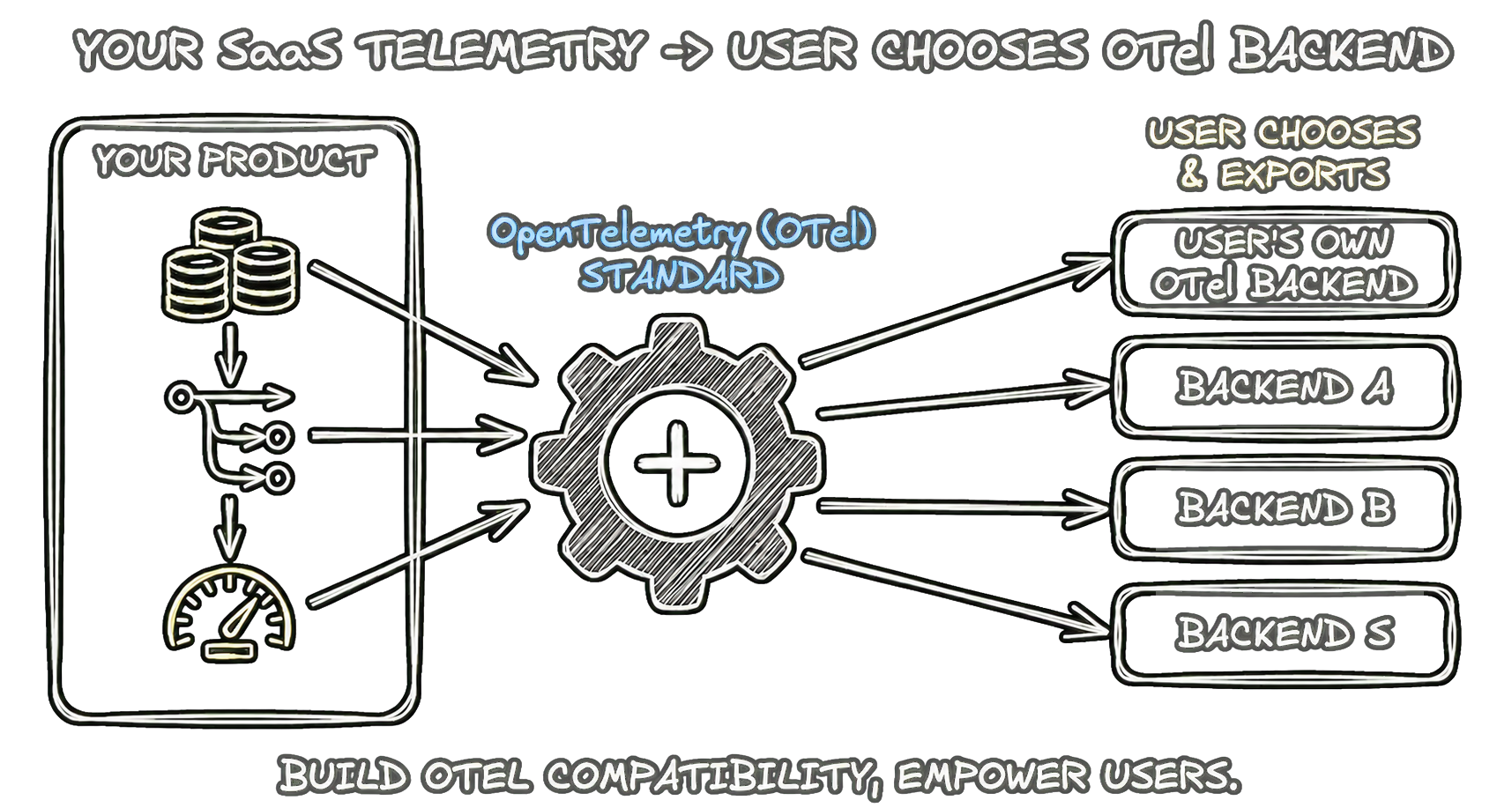
In the previous era of infrastructure software, the sales motion was inseparable from the 'sticky' agent. Founders built monitoring tools, security scanners, or performance tracers that required customers to install a proprietary piece of code deep within their stack. Once that agent was deployed across a thousand nodes, the switching costs became the moat. But the rise of OpenTelemetry (OTel) has fundamentally inverted this dynamic, turning what was once a competitive advantage into a potential liability for early-stage companies trying to find their first ten design partners.
Modern engineering teams are increasingly allergic to vendor lock-in at the data collection layer. They want to own their telemetry pipeline without being wedded to a specific dashboard or storage backend. For a startup founder, this means the 'zero to one' journey now requires being OTel-native by design. You are no longer building a closed loop; you are building a specialized lens that must sit atop a standardized, universal stream of data. If your product requires a custom library that doesn't play well with the industry's open standards, you aren't just building a feature—you are building a barrier to entry.
Building OTel-native from day one is not just a technical choice; it is a strategic distribution play. It allows a startup to slide into an existing environment without the high-friction 'rip and replace' conversation that kills deals in the seed stage. When a product can ingest and export to any observability stack, it lowers the cognitive load for the DevOps lead who is already overwhelmed by tool sprawl. The value proposition shifts from 'install our platform' to 'plug our intelligence into the data you already have.'
However, this shift places an immense burden on product differentiation. When you cannot rely on a proprietary agent to hold the data hostage, your UI, your alerting logic, and your specific insights must be significantly better than the incumbents. You are competing on the quality of your synthesis rather than the uniqueness of your collection method. Operators who embrace this find that it accelerates their path to product-market fit because it eliminates the most common technical objection. In the current climate, the goal is to be the easiest tool to adopt and the hardest tool to turn off because of the value it provides, not because the uninstallation process is a nightmare. The era of the proprietary moat is over; the era of the portable, high-utility node has begun.
One essay. Every Friday. From operators who actually run things.
Join thousands of founders, partners, and operating leaders. No filler. Unsubscribe anytime.
Reader notes
0 NotesSign in to comment. Comments are signed and public.
Sign in →