Field Notes
Gonokuni Reimagines the Go Board as a Living Infrastructure Simulation
A new wave of independent developers is attempting to solve the engagement gap in ancient board games by blending tactical play with generative city-building mechanics.
Numerous Times Startups Desk
Founders, funding rounds, and the zero-to-one slog
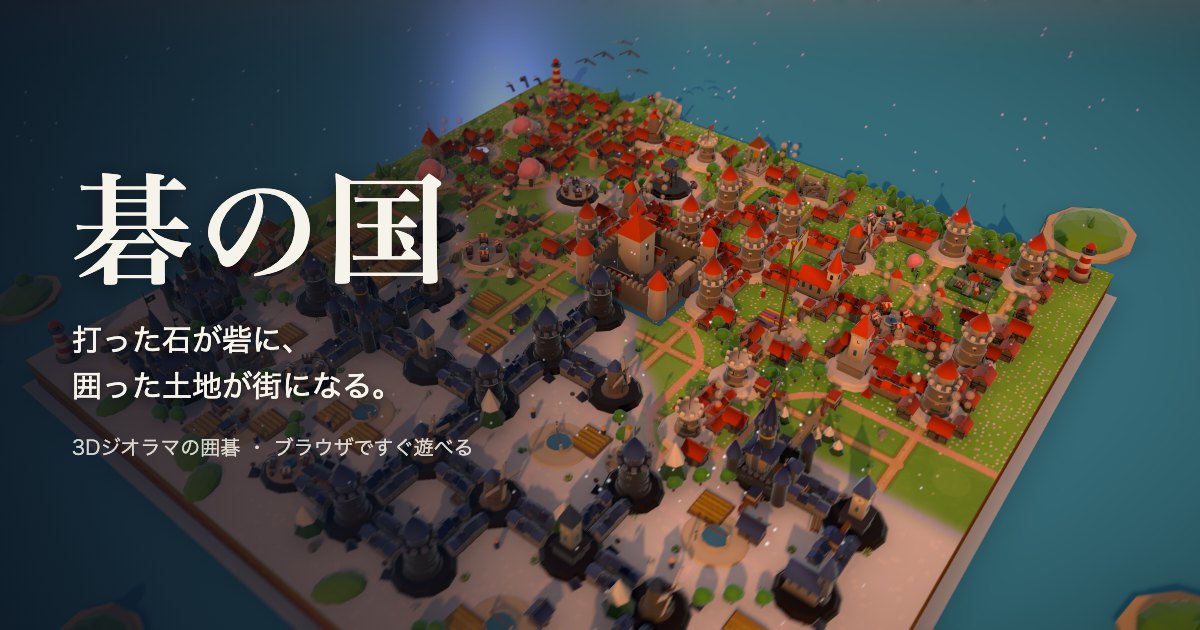
The intersection of ancient strategy and modern simulation has found a new entry point with the quiet debut of Gonokuni. Developed by a small team operating under the PLPL banner, the project effectively retools the traditional mechanics of Go into a generative urban planning simulation. Unlike typical digital adaptations that prioritize competitive matchmaking or AI training, Gonokuni treats every stone placed on the grid as a catalyst for a burgeoning digital ecosystem. The game, which surfaced this week across developer communities, signals a shift in how indie creators are approaching the 'gamification' of classical logic.
Traditionally, the game of Go—or Igo—revolves around territory control through the placement of black and white stones on a 19x19 grid. It is a game of abstract patterns and crushing mathematical complexity. Gonokuni strips away the stark minimalism of the original game and replaces the stones with architectural assets. As players vie for influence, the board transforms from a sterile grid into a dense cityscape. Capturing an opponent's territory isn't just a point gain; it is a structural demolition that paves the way for new development.
This matters because the 'casualization' of high-friction strategy games represents a significant untapped market in the indie gaming sector. For decades, the barrier to entry for Go has been its perceived austerity. By layering a city-builder aesthetic on top of its core logic, the developers are tapping into the 'cozy gaming' trend without sacrificing the intellectual rigor that defines the genre. It is a play for a different kind of user retention—one where the incentive to continue is not just a rising ELO score, but the visual satisfaction of seeing a metropolis thrive or crumble based on tactical positioning.
From a product-market fit perspective, Gonokuni sits in a lonely but lucrative corner. It sidesteps the high-fidelity demands of triple-A strategy titles while offering more depth than standard mobile puzzles. For operators in the digital tabletop space, the success of such a hybrid model could dictate how other classical games are modernized. If players are more willing to engage with complex systems when they are disguised as creative endeavors, the roadmap for digital board games will likely shift toward these 'generative' visuals.
Moving forward, the industry should watch for whether Gonokuni attempts a formal commercial launch or remains a niche web experiment. The primary hurdle for any strategy-sim hybrid is balancing the competitive integrity of the underlying game with the randomized chaos of a city builder. If the PLPL team can prove that the 'town-building' aspect isn't just a cosmetic skin but a functional part of the strategy, they may have found the formula for the next breakout indie hit.
One essay. Every Friday. From operators who actually run things.
Join thousands of founders, partners, and operating leaders. No filler. Unsubscribe anytime.
Reader notes
0 NotesSign in to comment. Comments are signed and public.
Sign in →