Field Notes
A Shallow Tectonic Shift Near Panama Stirs Regional Stability and Canal Logistics
A magnitude 6.0 earthquake at a shallow depth of ten kilometers highlights the vulnerability of critical maritime infrastructure and local populations in Central America.
Numerous Times World Desk
Politics, conflict, disasters, and what's circulating
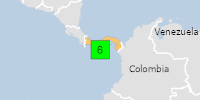
Early on the morning of October 10, 2026, a significant seismic event struck Panama, sending tremors through a region that serves as the literal and metaphorical bridge between two oceans. According to seismic monitoring data, the earthquake registered a magnitude of 6.0 and originated at a depth of roughly ten kilometers. While a magnitude of this scale is not uncommon in the Ring of Fire, the shallow depth of the rupture presents a specific set of challenges for local infrastructure and the safety of the surrounding population.
The earthquake occurred shortly after 4:00 AM UTC, a time when most residents were likely at home. Initial assessments suggest that several thousand people were located in areas where the shaking intensity was severe enough to potentially cause damage to structures. In the immediate aftermath of such events, the primary concern for regional authorities is the integrity of rural housing and the stability of the mountainous terrain, which is often prone to landslides when saturated by tropical rainfall.
Beyond the immediate human impact, the world’s attention is focused on the Panama Canal. As a vital artery for global trade, any disruption to the canal’s locks or the artificial lakes that feed them has immediate ripple effects on the global economy. In past seismic events, the Panama Canal Authority has conducted rigorous inspections to ensure that the complex machinery and concrete barriers remained uncompromised. While there have been no confirmed reports of structural failure at the canal following this latest tremor, the event serves as a stark reminder of the geological risks inherent in this transit corridor.
Politically, the Panamanian government faces the task of coordinating emergency responses in potentially isolated regions. The ability of the state to reach vulnerable communities quickly is often viewed as a litmus test for administrative competence and disaster preparedness. For the international community, the stakes involve the reliability of supply chains. A significant portion of global maritime traffic relies on the predictability of this route; even the perception of risk can lead to increased insurance premiums for shipping companies and delays in the delivery of energy and consumer goods.
As of this moment, specific casualty figures and the full extent of property damage remain unconfirmed. Information from remote areas often trickles in slowly, and local officials have cautioned against accepting unverified reports circulating on social media regarding bridge collapses or dam failures. For now, the focus remains on damage assessment and the monitoring of aftershocks, which frequently follow shallow ruptures and can pose a secondary threat to weakened buildings. The situation underscores the delicate balance Panama maintains between its role as a global logistics hub and its reality as a seismically active territory.
One essay. Every Friday. From operators who actually run things.
Join thousands of founders, partners, and operating leaders. No filler. Unsubscribe anytime.
Reader notes
0 NotesSign in to comment. Comments are signed and public.
Sign in →